
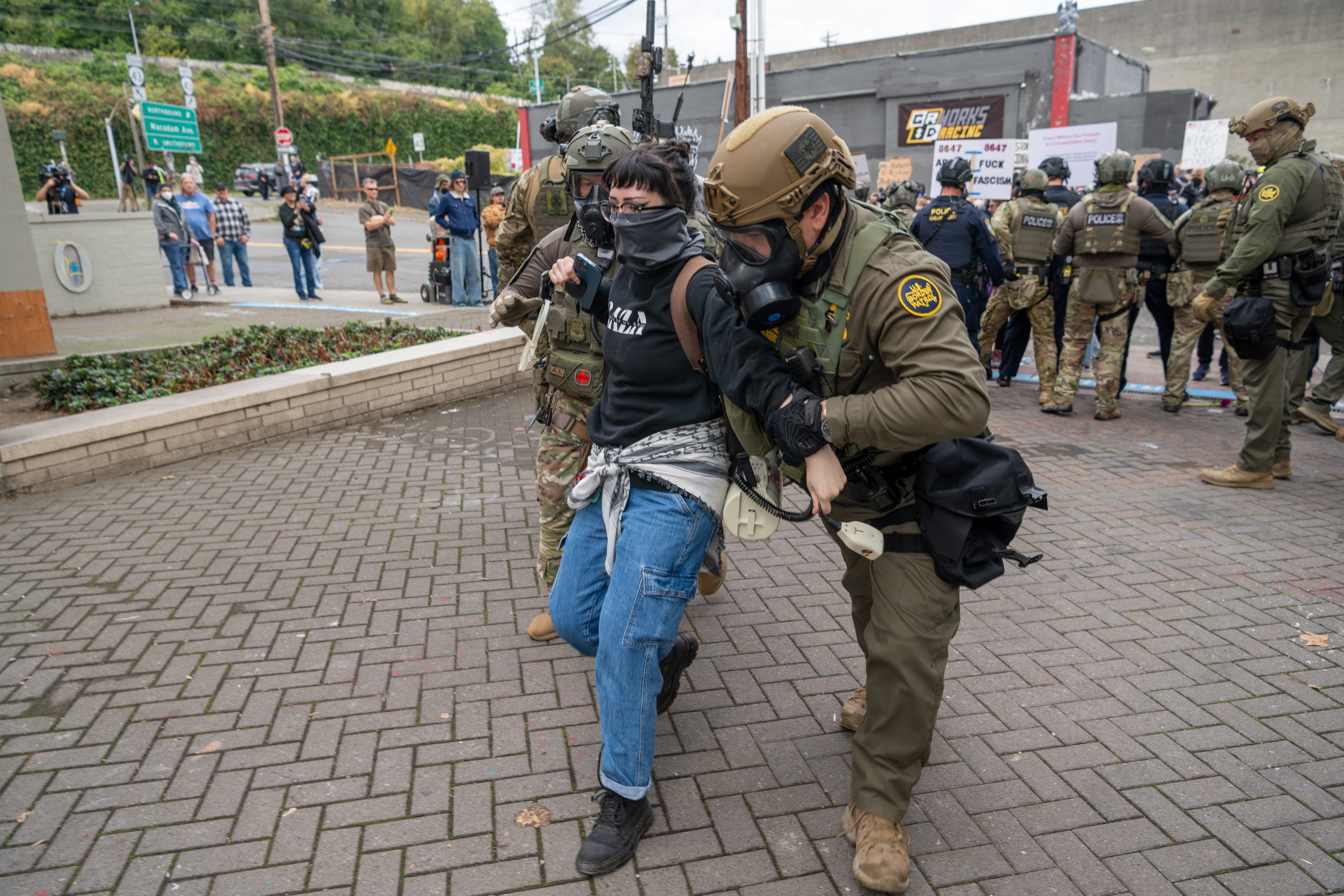
In recent years, Immigration and Customs Enforcement (ICE) has become one of the most debated federal agencies in the United States, reflecting broader national tensions over immigration, border security and human rights. Tasked with enforcing immigration laws within the country’s interior, ICE operates at the intersection of law enforcement and humanitarian concern. Its expanded authority, increased visibility and aggressive enforcement strategies have sparked public protests, legal challenges and policy reforms at both the federal and local levels. As immigration continues to shape America’s social, economic and political landscape, ICE stands at the center of a critical conversation about how the nation defines security, justice and belonging. I spoke with students and a member of faculty to gain their insight on this nation-defining matter.
Damien Simmons, a junior criminal justice and sociology major with a minor in general studies from Del City, Oklahoma, is an activist on campus. Simmons is also a spring 25 initiate of the Beta Kappa chapter of Alpha Phi Alpha fraternity incorporated, and serves as the SGA Civic Chair. Simmons thinks current ICE practices challenge constitutional limits placed on federal power. “Especially with the recent events, like Don Lemon’s arrest, and other journalist activists being detained where they’ve already proved that judges were saying that it was unlawful directly violating several amendments, the first amendment freedom of speech, the fourth amendment right to a fair trial, like it fundamentally violates the constitution in so many ways and it’s actually an egregious misuse of power by the executive branch.”
Simmons said it’s very important to see other groups of people stand up to these types of justices.” Throughout our history, black americans have experienced such violence. I hate the fact that it took a white woman being shot to spark this, but change never truly happens when you want to. It happens when people decide it will, as they say, the resolution will not be televised, it’s because it’s a thought you can’t really photograph when it happens. “

SGA Civics Chair Damien Simmions
Then an athlete provided his insights: Landon Greene, a Senior Health, Physical Education & Recreation Major from Houston, Texas. I asked him if more students should speak more about ICE and immigration policy. He stated, ” I feel like the students can have a voice in it, but I also feel like students who are foreigners can say more because ultimately they do know how it feels to be a non-American citizen living in the United States.
Green said he liked the networking and the end of the togetherness among the different POC communities during this time. He said, “You know, in history, there’s the black Panthers, there’s a brown Panthers. There are all these types of groups out there fighting against the same problems that’s going on, and I feel like if we were all to come together now and go against what’s going on and raise immediate coverage on what’s going on, this could possibly come to an end because right is right and wrong is wrong.

Landon Green
Lastly, a decorated faculty member spoke on this divisive topic, Professor Jerry Elix, who holds a master’s degree in liberal arts and political science. I brought up whether aggressive immigration policies strengthen national security or weaken trust in government institutions, and where the line lies between enforcement and violations of people’s civil rights. He stated,” It’s how it’s done that’s the question I mean, that’s the only answer to that question, because if you can aggressively enforce immigration, it will shrink national security and make people telescope. However, if you do it wrong in a very callous way, such as what we’re seeing in Minnesota, you’re gonna get distrust.
There doesn’t seem like there’s a process for atonement, especially for people who done very good. Remember, this strong enforcement was brought in this way to get rid of criminals; many people have put out the statistics that some people were not even illegal. We are currently seeing that some people being taken out are not criminals. hell, we’re seeing a lot of people who were legal and are naturalized citizens who are being arrested and even falsely deported, and there doesn’t seem to be any appeal to that, so yes, the mistress will grow.

Professor Jerry Elix
Ultimately, the ongoing debate surrounding Immigration and Customs Enforcement highlights the complexity of immigration policy in the United States and the deep divisions over how those policies should be enforced. As lawmakers, communities, and advocacy groups continue to challenge and reshape ICE’s role, the agency remains a symbol of broader questions about national identity, human rights, and the rule of law. Understanding ICE’s place in America today requires not only examining its enforcement practices but also considering the lived experiences of those affected and the long-term implications for the nation’s values and democratic principles.

Isaiah Price
SPORTS EDITOR AND STAFF REPORTER
Isaiah price is a 4th generation Langston student who is involved in multiple student organizations on campus. He is a sophomore Broadcast Journalism major from Mansfield, Texas. He wants for the Gazette to present accurate and fair news for the Langston people and get the correct information out. He likes to cover sports and stories about people on campus, whether they’re a student leader or have a business. If you have a story to tell he wants to help you tell it. He thinks the work the Gazette does matters because it tells the truth and sheds light on things that usually aren’t talked about. His favorite hobbies are going to the gym and playing video games. To Be reach contact on instagram at _isaiah_price or email at Isaiah.price10@langston.edu


