
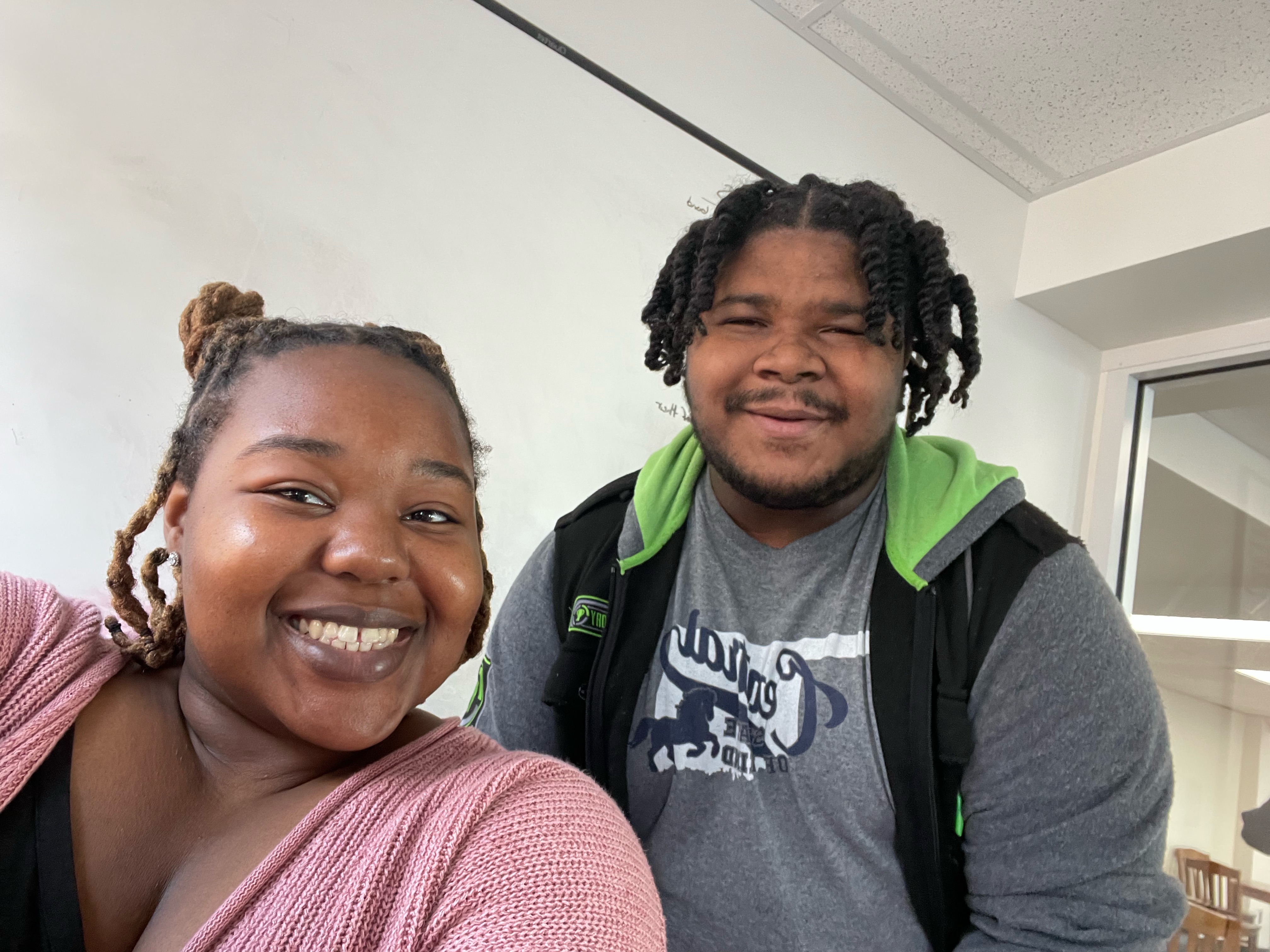
When first coming to college, it can seem like a new normal. It’s a period filled with opportunity with all the people to meet, classes to take and campus organizations to join. Students come ready to take advantage of as many opportunities as they can since they want to make the most of their college experience. They might be surprised to learn that being active on campus has a number of significant advantages. Although meeting other students is undoubtedly one of the benefits of joining college clubs and organizations, it’s not the only one. There are additional advantages to participating.
Lovette Mba, junior business major, took a leap of faith when deciding to come to Langston.
“I really wanted to go to an HBCU … My parents didn’t want me to travel outside of Kansas, but they said I could leave Wichita if I earned a full ride, so I just took that as a challenge. Langston fulfilled my wish, and I’m now here.”
Lovette identifies her college experience as stagnant but revolutionary. “It’s not at all what I expected it to be, and it did take me some time to get out my own shell. However, I held myself to a standard to continue to challenge myself every single year.”
As a freshman, Lovette felt like there were not many unique organizations that catered to all interests of students and although she stayed in tune by following all of the social media pages, something was still missing. So she started her own organization: the African Students Association.
“If you don’t see something you want, become it. And I wanted to create and be a part of the African community. So I went out of my way to create ASA, because that’s something I miss from back home.”
One thing that kept Lovette encouraged when becoming involved on campus is “If you’re working on an idea by yourself for a while, use that as motivation to make extra efforts to connect with others and identify potential supporters of the idea.”
Charles Gates III, senior biochemistry major, was not always an open person. He decided to step out of his comfort zone and make the best of his college experience by reaching out.
“I was more trying to start out with my outgoing nature because, I didn’t want to just be at home alone all the time. I began by simply asking around on campus, getting to know some upperclassmen, and they essentially directed me in the right direction. SGA was one of the first organizations to offer me guidance, and with the help of the ideas I had, I was able to meet Mr. Robert Couch, who later introduced me to the NAACP. Since I was more concerned with students and making sure that everyone succeeds, he thought I would be a good fit for the organization.”
Gates did have personal concerns as freshman coming into Langston regarding campus involvement.
“I feared that I may not be a certain way I wouldn’t be able to adapt to the culture that is on campus to relate to other students or to do what I needed to do. I consider myself a little distant from everyone else.”
In highschool, Gates considered himself a bookworm and closed off. Yet, he realized he wanted a different outlook on his college experience.
“That was always hard working with that. But I wanted to be known on the campus as something more. Being on the SGA academic committee, I learned that there was a lot of stuff in SGA that students didn’t understand or know. As I was more fortunate than other students, I wanted to make a commitment to being someone who can clearly communicate the knowledge that I am being presented to students so that it can be easy for them to digest and to have a better college experience.”
There is also a point in time while being in college that you may become homesick. Gates was one of the individuals that came across this and shared how he managed.
“I was always homesick but again because I wanted my own independence and I wanted to try to live how I wanted. As with both with my college experience, I tried to distance myself from home as much as possible, but still on occasion visited every other weekend or so. And some people aren’t fortunate enough to go home to do that. But I think it is important to have a college experience versus just being home all the time and being used to being uncomfortable.”
Gates left some advice for students aspiring to become a part of campus organizations.
“Every student should have the chance to get uncomfortable and speak to other students on campus because it’s not what you know, it’s who you know. Whether you’re joking around or discussing some serious issues. You want to be able to demonstrate your versatility, your ability to perform under pressure, and your ability to endure discomfort while yet maintaining a positive attitude. And once others see that you are capable of doing this, they will take the time to invest in you and you’ll become great.”
Campus organizations are important to collegiate institutions due to building community. However, organizations would not be successful without the help of advisers. Dr. Latoya Johnson, assistant professor of mathematics, serves as the advisor for the National Council of Negro Women. Johnson shared that being an advisor has given her a new perspective regarding the student body and getting to know students outside of her classes.
“I think it’s kind of eye opening for you . It helps for you to see how everything kind of works within the organizations and all the things that they kind of have to go to. And I think it’s good to be involved so that you can interact with others, and you’re not just like closed off.”
Johnson wanted to become an advisor so that students would have a role model to look up to.
“I was requested by students, so I believe that this helps. I also believe that being an advisor and being a black woman with a doctorate in mathematics is essential and something for them to be able to see and look up to, so I thought that I might be a positive effect on the organization.”
Organizations can often become time consuming and it is important for students to prioritize.
“Students have expressed their overwhelm to me because they feel pressured to perform once they join a group. Numerous students have admitted to feeling overburdened by their durations and having high expectations of them. Because they still need to have time for their own studies and to do all the other things, I believe that it should be policy not to over stimulate our students within these organizations,” Johnson said.
Johnson left some advice for students aspiring to become active in campus organizations. “I think it’s really good to be involved in organizations because one, it’s service to your community, right? So you definitely want to have service. I would say don’t get overly involved. Langston is definitely a place where you can do too much. Like you can want to get involved in too many things and then you lose focus of your academics. So definitely, you know, pick something that you like and kind of invest your time with that. But don’t overly involve yourself because it could definitely happen.”

Story ideas, opinion editorials, calendar events and advertising requests can be sent to dthom34@langston.edu. You may follow The Gazette on Instagram @lu_gazette.
The Gazette serves as the student voice of Langston University. It is produced within the Department of Communication as a teaching tool and local news source for the campus community. The views and opinions expressed within are those of the writers whose names appear with the articles and do not necessarily represent the views of Langston University.


