
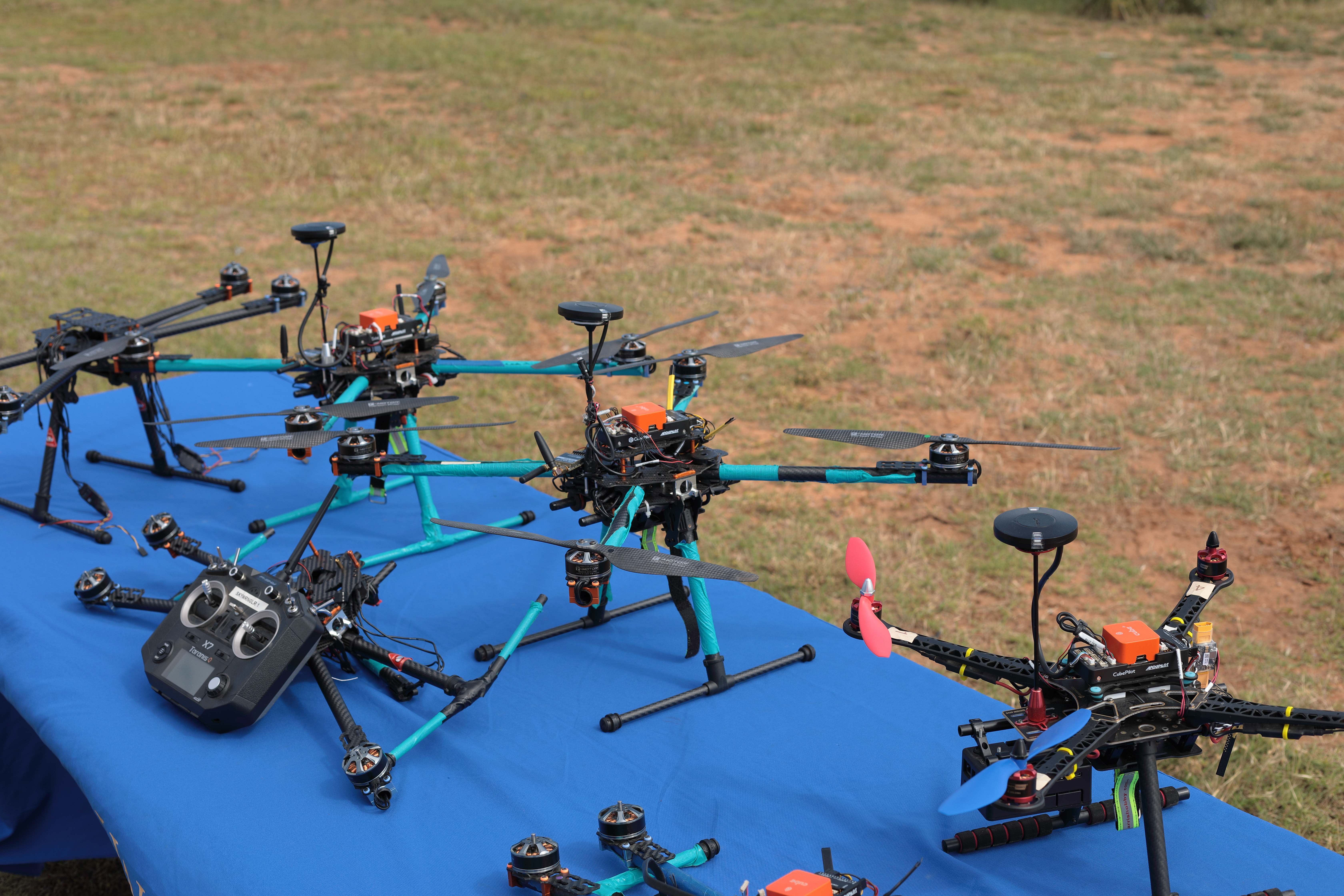
In a collaboration between the department of engineering and computer science and the department of agriculture, Langston is developing drones for farming purposes. Josie Throckmorton is a senior agriculture science major and the head of the student team developing drones for farmers to use.

The drones being developed are small and are meant to collect data for farmers and for other drones to use in their own operations. Throckmorton says these drones are able to “assist farmers with everyday labor,” such as checking the health of animals and pastures.
These drones are aimed to be much more affordable than other options on the market, one of which costs $40,000. The team has made drones that cost $900 and $1,500 dollars each.


The team has developed the schematics and 3D printed a lot of parts for the drone with two main parts being completely unique to Langston. These parts help hold some of the electronics to the body of the drone.
These drones can monitor pastures through the use of a special NDVI camera which sees near infrared and red light to assess the health of plants through a series of pictures it takes as it flies over the pasture. These images form a mosaic to create data for the large spray drone which will use this data to decide how much pesticide, fertilizer and water to spray on the crops.
To survey an 80×80 ft. area would take a farmer about an hour, where one of these drones can do that same work in five minutes. On top of that, the spray done will use pesticide, fertilizer, and water more efficiently than people would as it only targets areas that specifically need it.

The drone’s functionality around animals is not fully finished yet. The goats on campus have microchips in their tails which the drones will eventually be able to use to count them, as well as to “monitor the health of those animals based on their movement patterns and their heart rates,” Throckmorton said.
The heart rate monitoring is also important for seeing how the drones effect the animals. Josie’s team is in the process of making the drones less stressful for the animals, but as time goes on, the animals tend to become accustomed to being around the drones.
The drones are able to do all of this on their own, but the farmers would also be able to manually control the drones and change different parameters through a computer program.
These drones do have some drawbacks compared to a farmer doing some of these tasks manually. The main one is that the farmer would have to learn to use all of these programs and learn to fly the drone safely. Another downside is that the drones cannot fly when the wind speeds are high and their battery life is reduced when it is cold.


Two of the crashed drones on the display table. Each have been used for spare parts, so they are missing their propellers and a few other parts. The drone on the left is named Dr.DOOM; all of the drones have Marvel themed names.
So far, the team has faced a few incidents with the drones having wiring or battery malfunctions and calibration issues, which have caused three drone crashes. These drones mostly survived but are now used for their spare parts. These drones are designed to be modular, so if a farmer crashes their own drone they can easily swap out broken parts for new ones. The drone can also let the farmer know where it crashed when flying autonomously so it will be easy to retrieve.
The team is still a year or two from introducing their drones to the market but they could have a big impact on the affordability of these kinds of drones in the future.

Jeremy Arballo
EDITOR-IN-CHIEF AND STAFF REPORTER
Jeremy Arballo is a sophomore broadcast journalism student from Guthrie, Oklahoma. He enjoys writing feature stories and taking photos. He finds that everyone has a compelling story and he likes to share these stories with others, along with his photos. He believes that photos say more than 1,000 words can and that they show the beauty of life. Outside of school, Jeremy enjoys playing retro and new video games, taking photos, and collecting cds. Jeremy can be reached at jearbal@langston.edu and he posts his photos on his Instagram @jeremyarballo1.


