
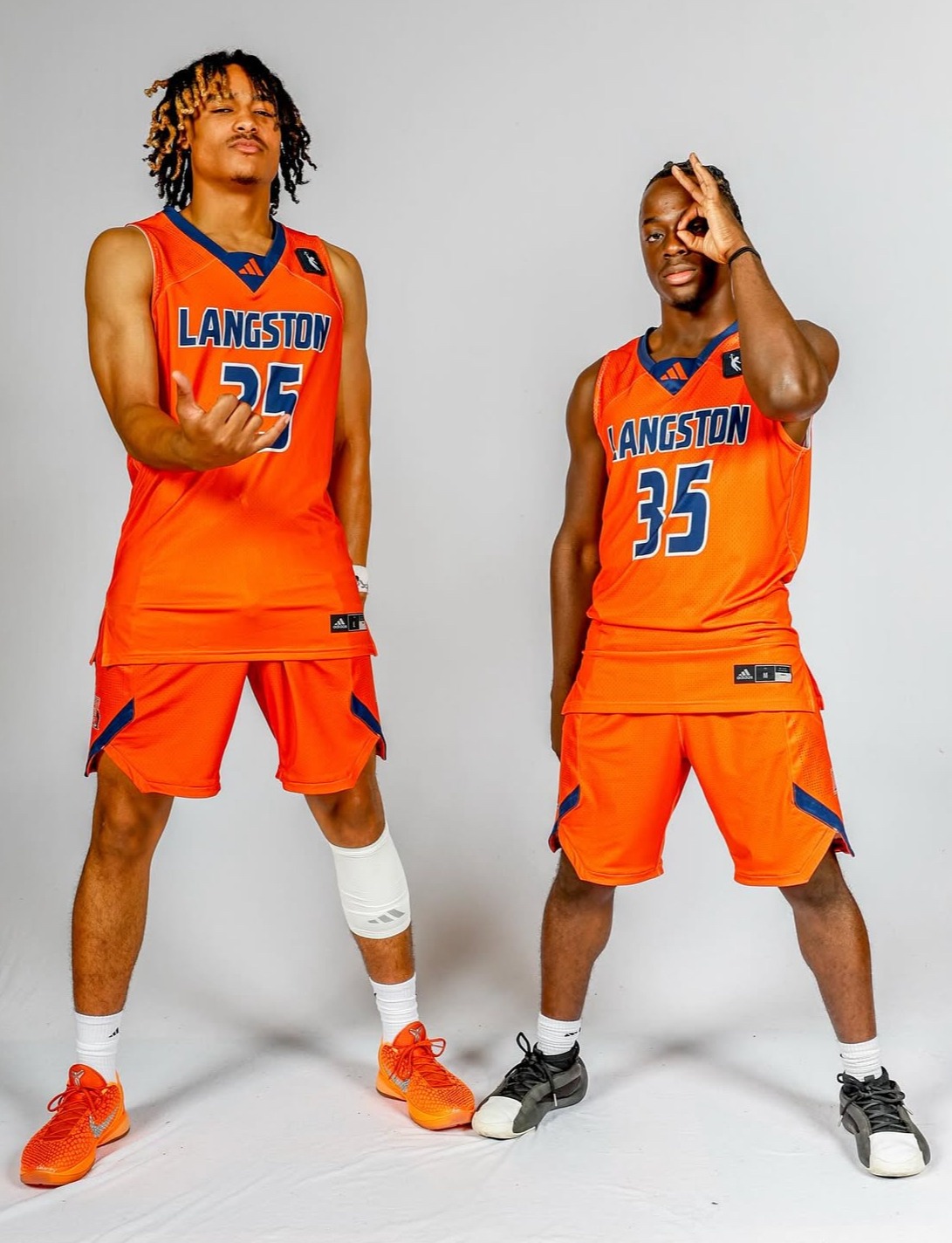
For many Langston University students, college life is busy enough with classes, homework, and finding time for a social life. But for two student-athletes on campus, Remon Tuck, a junior sociology major and member of Kappa Alpha Psi Fraternity, Inc., and Donte Manuel, a senior business administration major and member of Alpha Phi Alpha Fraternity, Inc., the demands are doubled. They are balancing not only athletics and academics, but also two of the most respected Greek organizations in the National Pan-Hellenic Council.
Their stories reveal the discipline, sacrifice, and support systems required to succeed, and they highlight a side of Langston University student life many never get to see up close.
A Lead Into Two Journeys
On an early Tuesday morning inside the C.F. Gayles Field House, long before most students begin filing into classes, Tuck and Manuel are already on the court. Their teammates wipe sweat from their brows as coaches whistle through drills. But what sets Remon and Donte apart is not just their athletic talent; it’s the fact that once practice ends, their day is far from over.
After basketball workouts, their schedules shift to lectures, study halls, fraternity meetings, mentoring events, and service projects. Every day is a test of time management and maturity.
Their experience makes one thing clear: being a student-athlete is demanding. Being a student-athlete and Greek? That requires a different level of discipline.
Balancing Academics, Athletics, and Greek Life
When asked how he manages his demanding schedule, Remon Tuck doesn’t hesitate.
“You have to plan ahead,” Tuck said. “Practice, classes, fraternity meetings… everything has a time and a place. Kappa Alpha Psi holds us to a high standard, and that pushed me to become more organized. If you don’t stay disciplined, you’ll fall behind fast.”
Manuel shares a similar routine and mindset.
“Being an Alpha taught me how to carry myself with purpose,” he said. “I’m a student first, an athlete second, but I also have leadership responsibilities in my fraternity. Balancing all of that took time, but it made me grow.”
Both student-athletes credit their success to structure, communication and support from their fraternities and athletics staff.
Why Join a Fraternity?
Some people might wonder why these athletes decided to join fraternities when they’re already committed to a sport. For Remon, the answer was personal.
“I wanted brotherhood and professional development beyond basketball,” he said. “Kappa helped shape me into a better man.”
For Manuel, joining Alpha Phi Alpha was about legacy.
“Alpha stands on scholarship, leadership, and service,” he said. “Those are things I already valued. Being a part of this fraternity was something I dreamed about.”
How Fraternity Life Impacts Athletics
Surprisingly, both athletes explained that Greek life made them better teammates and better students.
“My Kappa brothers support me at games, remind me to stay on top of grades, and hold me accountable,” Remon said.

Manuel added, “Alpha gives me motivation. When your brothers believe in you, you perform differently—on the court and in the classroom.”
The Challenges: Time, Pressure, and Expectations
Despite the benefits, juggling athletics and Greek life comes with challenges.
“There are days when practice ends late, and I still have fraternity responsibilities,” Remon admitted. “But communication helps. Coaches understand, and my fraternity brothers understand.”
Manuel said the toughest part is avoiding burnout.
“You can’t let anything slip,” he said. “Being an Alpha means upholding a legacy. Being an athlete means performing every day. That pressure can get heavy, but it builds you.”
Similarities Between Teams and Fraternities
When asked what connects sports and fraternity life, both athletes had the same answer: brotherhood.
“In both environments, you rely on your brothers,” Tuck said. “It’s all about trust.”
Manuel agreed. “Leadership, unity, accountability, those things show up in both basketball and Alpha Phi Alpha. They prepare you for life.”
A Coach’s Perspective
To better understand how student-athletes balance so much, men’s basketball assistant coach Jon Warren, who has been at Langston University for four years and himself is a member of Alpha Phi Alpha, shared his insight.
“These young men carry tremendous responsibility,” Coach Warren said. “But fraternities often help them, not hurt them. Remon and Donte are examples of how Greek life can support maturity, leadership, and academic focus. They show what it means to represent Langston with pride.”
Staying Motivated and Managing Stress
For Remon, staying motivated comes down to remembering his goals.
“I think about why I’m here and who I’m doing this for,” he said.
Donte stays grounded by leaning on his fraternity brothers and teammates.
“They check in on me. They motivate me. Having a strong support system is everything.”

Advice for Future Student-Athletes Considering Greek Life
Remon’s advice is simple: “Do it—but stay disciplined. If you’re organized, you can succeed in both.”
Donte encouraged future students not to let fear hold them back. “You grow so much. It’s not easy, but the experience is worth every minute.”
The Bigger Picture
Remon Tuck and Donte Manuel’s stories show that Langston University produces more than athletes—it produces leaders. Their journeys reflect dedication, pride, community, and the true meaning of brotherhood.
They prove that with support, discipline, and purpose, students can excel in every area of campus life.
Cameron McCoy
Cameron McCoy is a senior broadcast journalism major.


